
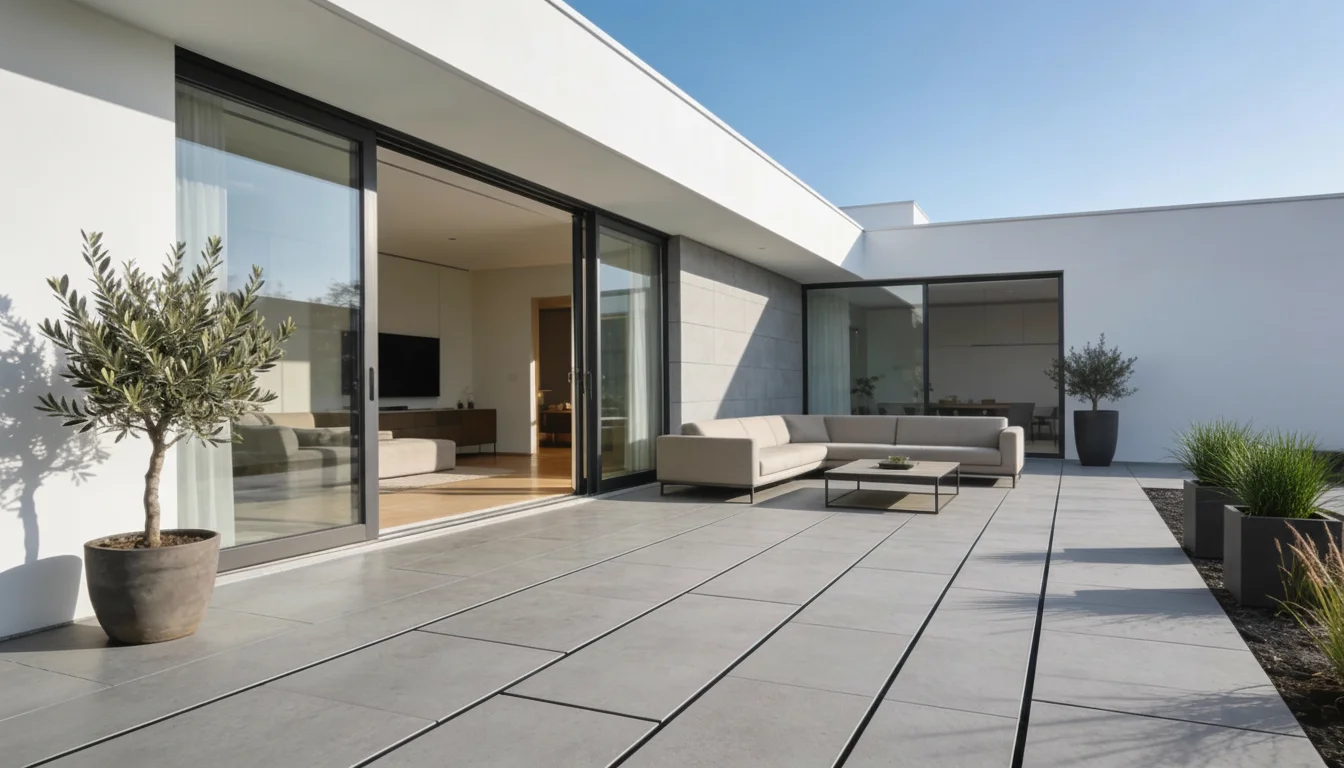
 Seamless indoor-outdoor transitions are the hallmark of 2026 patio design.
In 2026, the backyard has evolved far beyond a simple patch of grass with a barbecue grill. It has firmly established itself as an extension of the indoor living room, a sanctuary for wellness, and a primary zone for entertainment. At the heart of this transformation is the paver patio.
Gone are the days of generic, poured concrete slabs that crack and fade within a few years. Homeowners today are demanding sophistication, durability, and style. They are moving towards designs that offer seamless transitions between indoor and outdoor spaces, blurring the architectural lines of the home.
The overarching trend for 2026 emphasizes “quiet luxury”—an aesthetic defined by clean lines, substantial materials, and a minimalist vibe that feels both modern and timeless. Functionality is not being sacrificed: better drainage, eco-conscious materials, and smarter layouts are becoming the new standard.
Whether you are dreaming of a sprawling multi-level entertainment zone or a cozy, budget-friendly retreat for morning coffee, the versatility of modern pavers allows for unlimited creativity. This guide explores 15 stunning paver patio ideas shaping 2026, with practical tips you can apply in any backyard.
The strongest design shift in 2026 is the move toward large-format pavers. Instead of small bricks or 12x12 tiles, designers are using massive 24x24, 30x30, and even 24x48 inch slabs. Fewer joints mean a cleaner, more expansive visual field that makes even compact patios feel larger.
When large porcelain or concrete slabs are installed with tight joints, the patio floor starts to look like a single monolithic surface. Matching the paver color to your interior flooring enhances the “one big room” effect between indoors and outdoors.
Porcelain pavers are especially popular for this look because they are precisely cut and have excellent stain and fade resistance, making them ideal for dining areas and high-traffic zones.
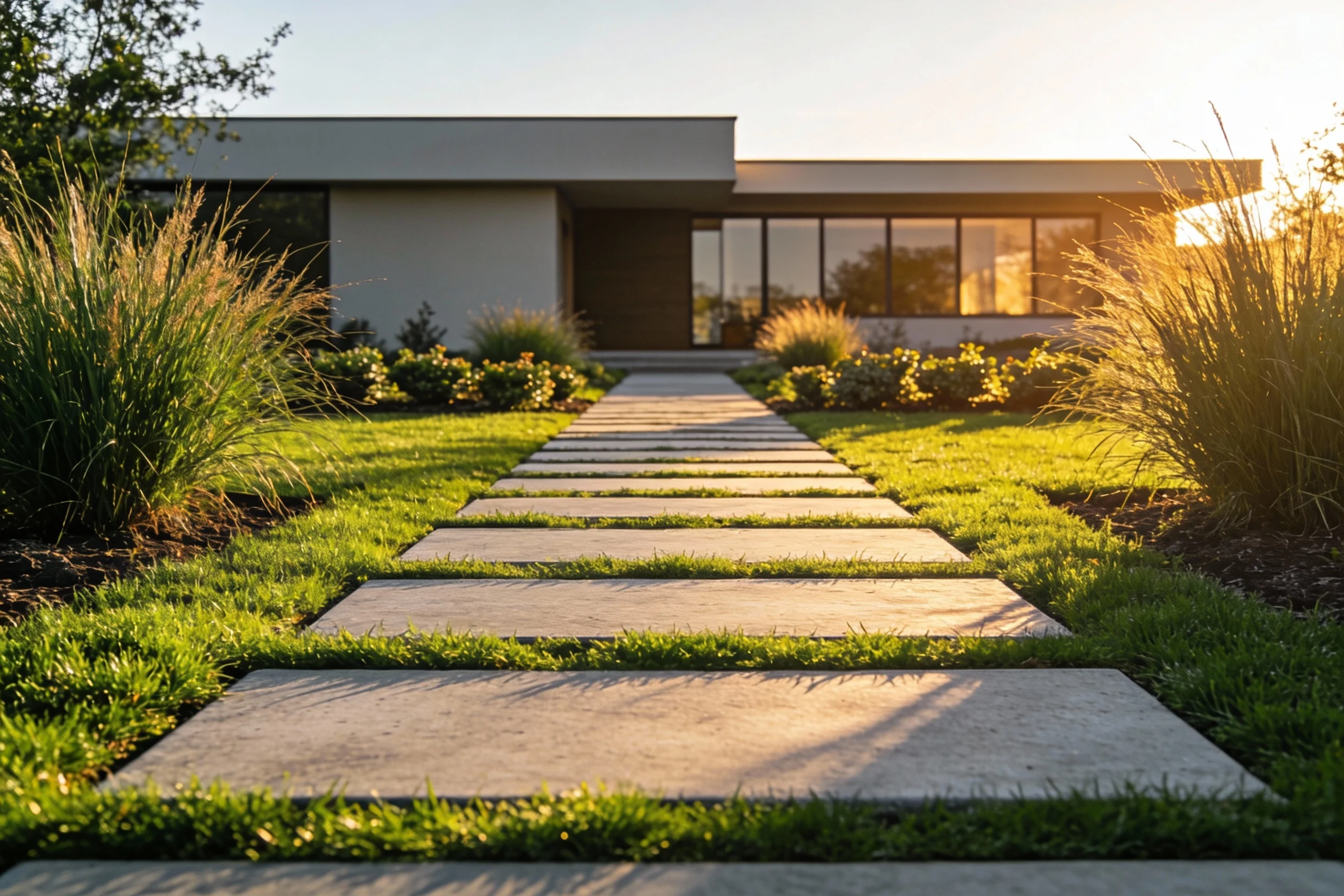 Floating pavers with grass joints add a modern, airy feel.
“Steppers” are oversized pavers set apart with 4–6 inch gaps filled with grass, gravel, or ground cover. This design visually lightens the patio, adds drainage, and introduces a softer, more organic feel.
Floating paths work especially well leading from a solid patio to a fire pit, garden, or pool area, creating a sense of movement and progression through the yard.
Sleek concrete pavers with smooth finishes and cool gray tones are perfect for industrial-style homes. Paired with black metal railings, minimalist furniture, and warm wood accents, they create a curated, urban look in suburban backyards.
Natural stone remains the benchmark for timeless outdoor luxury. Each piece has unique veining, color variation, and texture, creating a patio that never looks “cookie cutter.”
Limestone is one of the most desirable patio materials in 2026 thanks to its cool feel underfoot and soft, elegant appearance. Light gray and cream tones are especially on trend, working beautifully with white, black, and natural wood exterior palettes.
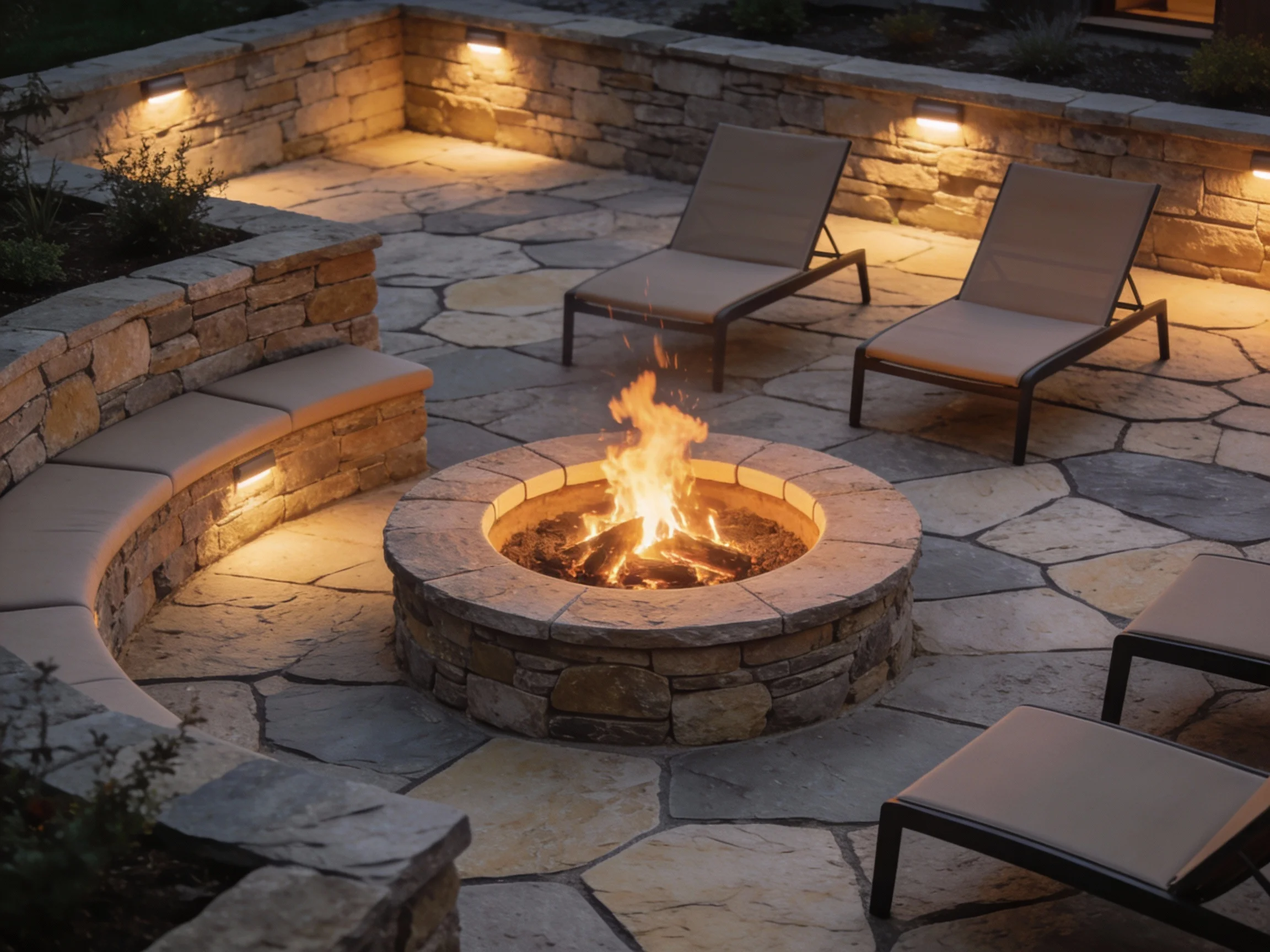 Natural stone adds character and warmth around outdoor fire features.
Travertine’s naturally textured surface makes it an ideal choice for poolside patios. It offers excellent slip resistance, stays relatively cool in hot climates, and brings a classic Mediterranean feel that never goes out of style.
Bluestone has long been a favorite in Northeastern patios, but 2026 favors sawn rectangular patterns over random “crazy paving.” Organized, linear layouts show off the stone’s blue-gray tones while aligning with modern architecture.
| Material | Look & Feel | Best Use | Notes |
|---|---|---|---|
| Concrete Pavers | Uniform, modern or rustic | Most budgets, DIY projects | Seal every 3–5 years for color protection. |
| Limestone | Soft, refined, cool to touch | Pool decks, premium patios | Choose lighter tones for hot climates. |
| Travertine | Warm, textured, Mediterranean | Pool areas, sunny backyards | Use premium grade for freeze–thaw performance. |
Curves are making a strong comeback as homeowners look to soften straight architectural lines and create more organic outdoor spaces. Circular and free-form patios feel relaxed and inviting, especially when paired with lush planting.
A circular patio centered on a fire feature naturally encourages face-to-face conversation. Arrange chairs in a ring around the flames and you have an instant gathering hub separate from the main dining or cooking area.
Soft curves in paver pathways guide the eye through the landscape and create opportunities for layered planting beds along the edges. Even a small yard feels more dynamic when not every line is straight.
Sloped yards can be challenging but also offer some of the most dramatic design potential. Multi-level paver patios turn grade changes into usable, visually interesting zones.
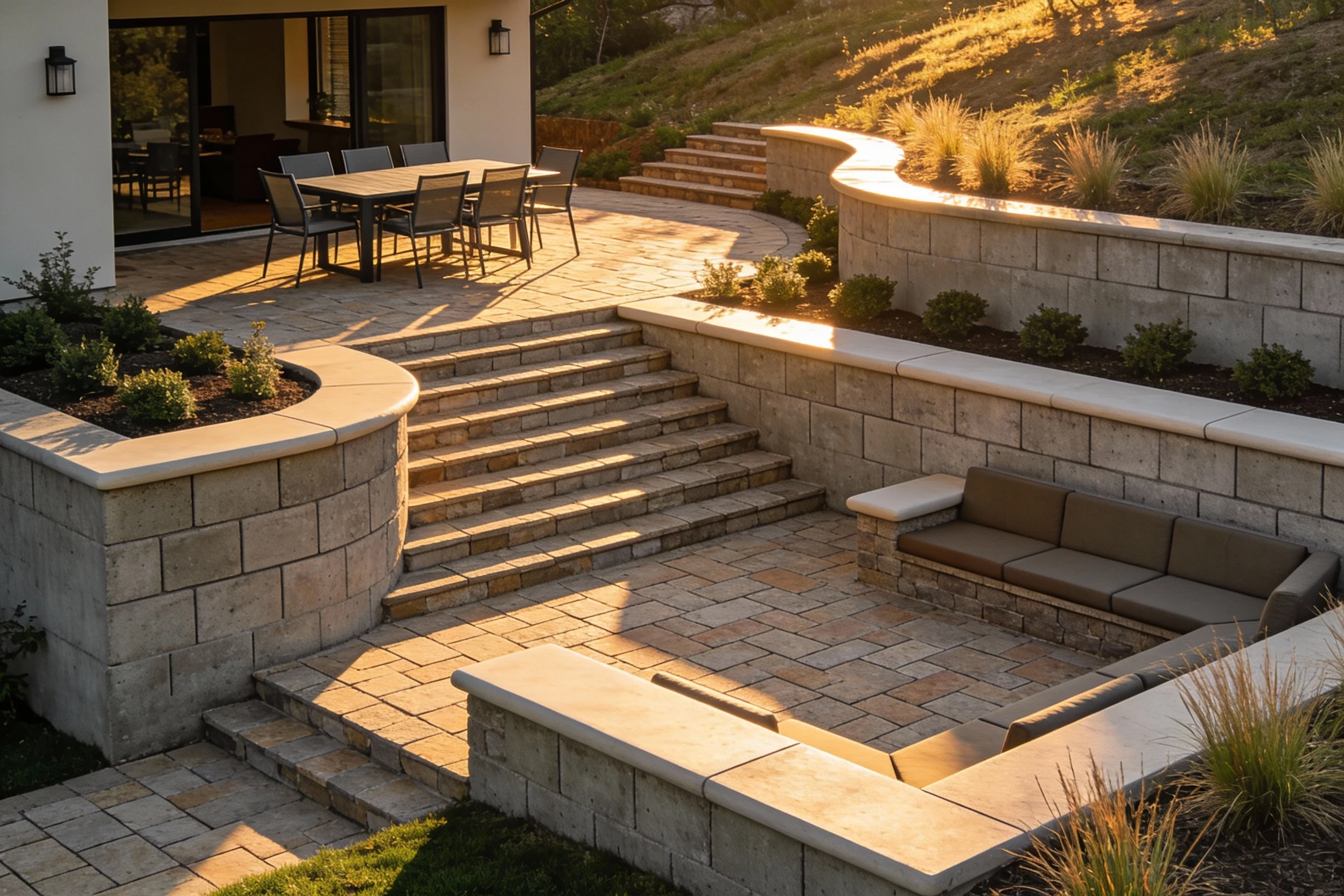 Layered levels create distinct outdoor “rooms” on sloped lots.
Use low retaining walls and short stair runs to create terraces: one for dining, one for lounging, and one for a fire pit or spa. Each level feels like its own outdoor room while still connecting visually.
Retaining walls can double as permanent seating when capped with smooth stone or concrete. This saves space and budget on outdoor furniture and works especially well around fire pits and along edges with views.
Cool gray palettes dominate 2026, from soft foggy tones to charcoal. Grays work with nearly any exterior color scheme and allow plants, furniture, and decor to stand out.
Lightly marbled gray pavers that resemble concrete clouds are popular for their ability to hide dust and minor stains. Pair them with black or deep brown furniture for a polished, high-contrast look.
Contrast borders in charcoal or near-black around a lighter main field create a framed, custom look. Add inlay bands to define dining, lounge, or cooking zones without building walls.
Not every dream patio needs a luxury budget. Several smart design choices can drastically cut costs while still delivering a beautiful, functional space.
Use pavers only where you need stable footing (seating areas, paths) and fill the rest with compacted gravel. The mix of textures feels intentional and modern, and material costs drop significantly compared to a fully paved surface.
Standard clay brick can look incredibly upscale when laid in a herringbone pattern. The pattern adds strength and visual interest, making an affordable material feel custom.
Combining materials is a major design move in 2026. Wood or composite decking transitions into paver patios, and stone slabs intersect with gravel or turf strips to create rich, layered surfaces.
Mixing materials also helps control cost by using premium finishes in focal zones and more economical options elsewhere, without sacrificing overall style.
Permeable paver systems are gaining popularity as homeowners and municipalities focus on better stormwater management. These pavers are installed with open joints filled with small stone, allowing water to infiltrate rather than run off.
Modern permeable pavers look almost identical to standard versions but can help reduce puddling, protect landscaping, and support more sustainable backyard design.
A well-installed paver patio can last decades. The key is choosing the right materials and maintenance routine for your climate.
| Climate Zone | Main Challenge | Recommended Choice | Maintenance Tip |
|---|---|---|---|
| Cold / Freeze–Thaw | Heaving & joint washout | Concrete or dense natural stone | Use polymeric joint sand and avoid salt de-icers. |
| Hot & Sunny | Surface heat & fading | Light limestone or travertine | Choose light colors and reseal with UV-protective sealer. |
| Rainy / Coastal | Moss, algae, efflorescence | Permeable concrete pavers | Keep joints clean and rinse surfaces regularly. |
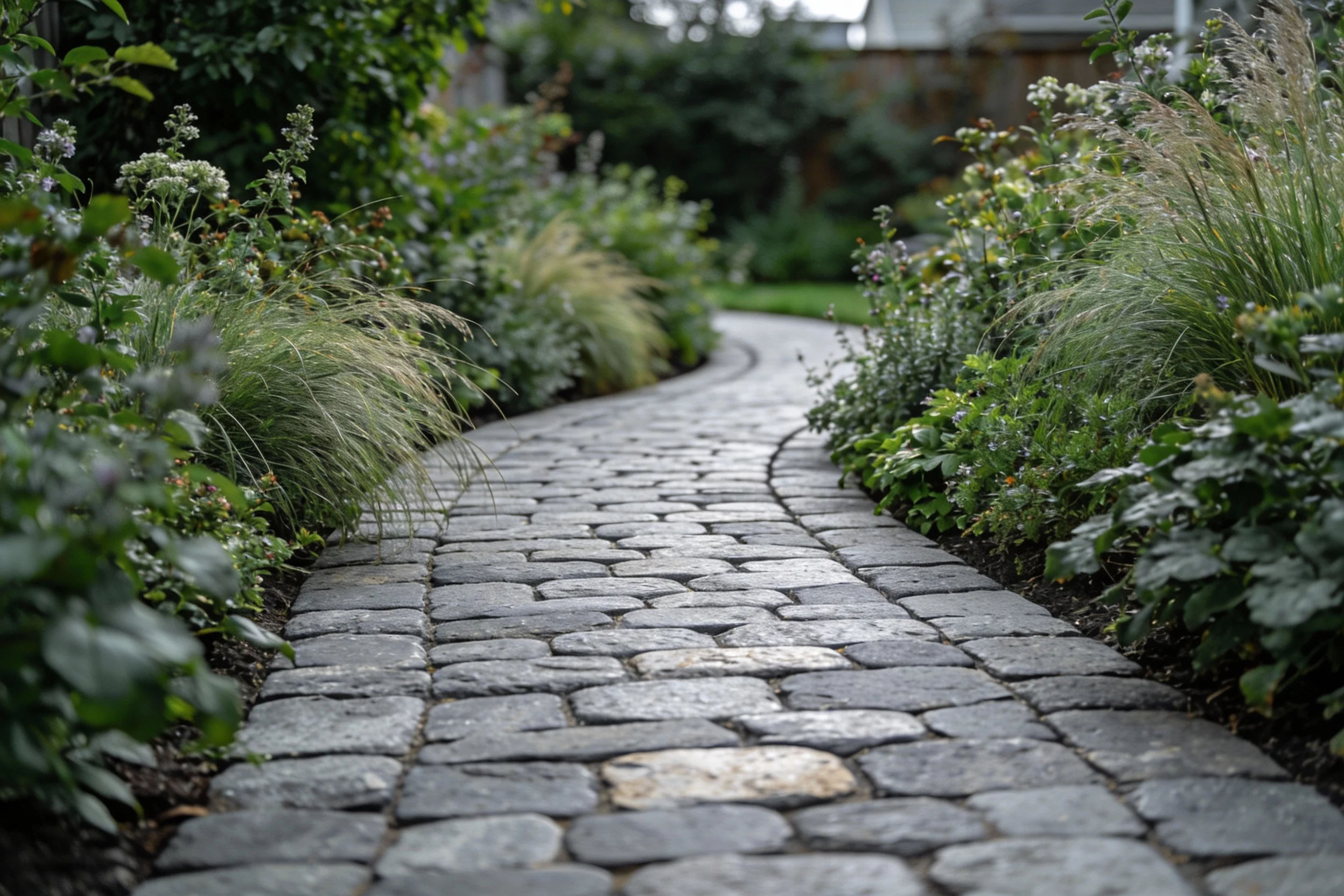 Curved stone paths help paver patios blend seamlessly into the landscape.
Large-format porcelain and limestone pavers are leading 2026 trends. They create clean, minimal surfaces that feel sophisticated and work well with modern outdoor furniture.
Upfront, no. Poured concrete is usually less expensive per square foot. However, pavers often win over time because individual stones can be replaced if damaged, while cracked concrete slabs are difficult to repair invisibly.
With a proper base and periodic maintenance (re-sanding joints, cleaning, sealing when needed), a paver patio can easily last 25 years or more without major structural issues.
They mainly require keeping the joints free of debris so water can pass through. Occasional vacuuming of the joint stone and refilling low spots is usually enough to keep them working well.
Paver patios in 2026 are all about versatility, comfort, and style. From large-format minimalism to cozy circular fire pit zones, there is a design approach for every backyard size and budget.
Whether you are drawn to the timeless charm of natural stone or the sleek practicality of porcelain, focusing on layout, climate-appropriate materials, and long-term maintenance will ensure your patio looks beautiful for years to come.